
Once again, the Small Grants Programme (SGP) of the Global Environment Facility (GEF) sets a shining example as a leading model in supporting inspiring initiatives that improve living conditions in local communities. It does so by empowering individuals to change their own realities, building bridges between local action and global impact through small-scale initiatives that make a big difference to the future of the global environment and sustainable development.
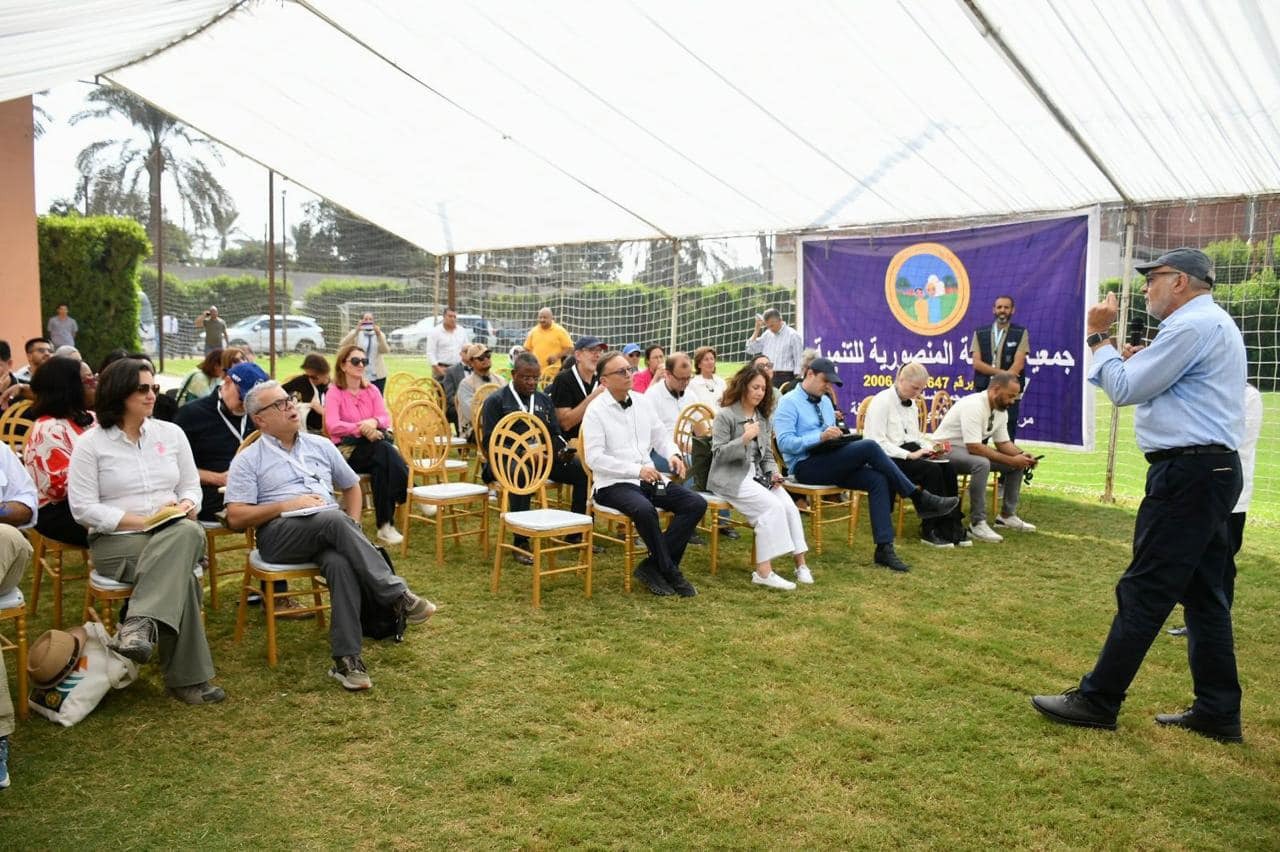
In a celebratory atmosphere filled with the spirit of cooperation, the “Nahdet El-Mansouria Association” in Giza Governorate hosted a distinguished event organized by the project “Knowledge Management, Communication, and Stimulating Innovation,” implemented by the Association of Environment and Development Writers with funding from the Small Grants Programme. The event was attended by high-level representatives from United Nations organizations, led by Ms. Chitoshi Nouguchi, UNDP Resident Representative in Egypt, along with several members of the executive boards of UN agencies from inside and outside the country.
The UN visit underscored the pioneering role played by the Small Grants Programme in supporting and empowering Egyptian civil society organizations. Members of the UN delegation expressed their admiration for the products and exhibits they saw, which embodied the outcomes of development projects implemented by local NGOs under the programme’s seventh phase. They stressed that Egypt’s experiences in implementing these projects represent a unique model of sustainable local development that relies on empowering vulnerable groups, women, and youth while simultaneously delivering global environmental benefits.
In her remarks, Ms. Nouguchi expressed deep appreciation for the efforts of Egyptian civil society in developing local development initiatives that tackle major environmental challenges. She stated that the Small Grants Programme serves as a pioneering platform for translating the principles of sustainable development into reality, through supporting projects that enhance women’s participation in the green economy, encourage youth innovation in renewable energy, natural resource management, and biodiversity conservation.
For his part, Dr. Emad Adly, National Coordinator of the Small Grants Programme in Egypt, affirmed that the seventh phase has expanded to cover most governorates of the country, bringing with it innovative community projects that reflect citizens’ ability to confront climate and environmental challenges. He explained that these projects vary from converting agricultural waste into organic fertilizer and manufacturing eco-friendly handicrafts, to initiatives generating electricity from solar energy in rural areas, as well as plastic waste management programs, eco-tourism, and biodiversity conservation. He emphasized that these initiatives embody the programme’s philosophy of linking local impact with global returns, stressing that small, intelligently managed and participatory funding can bring about major transformations in local communities.
In her welcoming speech, Eng. Inas Omar, Chairperson of Nahdet El-Mansouria Association, spoke about the association’s experience in implementing a project to generate electricity from solar energy to combat climate change. She explained that the project succeeded in ending residents’ suffering from power outages and delivered tangible economic and environmental benefits: providing clean, sustainable energy, reducing carbon emissions, and creating new job opportunities for women and youth in the installation and maintenance of solar panels. She added that the project has become a replicable model in rural villages seeking practical solutions to improve quality of life and achieve sustainable development without harming the environment.
The exhibition featured 12 projects out of 27 currently being implemented under the seventh phase of the Small Grants Programme, including:
- “Sustainable Local Youth Communities” – implemented by the Dialogue and Participation for Development Forum in Cairo and Alexandria
- “Sustainable Management of Plastic Waste and Climate Change Mitigation” – implemented by Al-Ruwad Foundation for Projects and Development in Cairo
- “Knowledge Management, Communication, and Stimulating Innovation” – implemented by the Association of Environment and Development Writers (organizer of the exhibition)
- “Green Waraq” – implemented by Bayt Ala Al-Sakhr Association in Giza
- “Generating Electricity from Solar Energy to Combat Climate Change” – implemented by Nahdet El-Mansouria Association in Giza (host of the exhibition)
From Luxor:
- “Applications of Regenerative Agriculture to Address Climate Change Impacts” – implemented by the Coptic Association for Social Care
- “Providing Livelihood Opportunities through Training on Recycling Horse Manure into Organic Fertilizer” – implemented by Nour Al-Islam Charitable Association
- “Green Village” – implemented by Ma’an for Development Association in Asfun
- “Sustainable Management of Our Natural Resources” – implemented by Al-Shorouk Association for Rural Women Development in Qena
From Fayoum:
- “Educational Center at Qarun Protected Area” – implemented by Bader Association for Sustainable Development
- “Bee Girls” – implemented by Senro El-Qibliya Community Development Association
- “Green Model for Environmental Transformation to Confront Climate Change” – implemented by Spirit of Life Association for Development and Dialogue
Additionally, the exhibition included the project “Creative Initiatives for Environmental and Economic Empowerment” – implemented by the Dahshur Tourism Development Association in Giza (one of the sixth-phase projects).
Members of the UN delegation stressed during the visit that the Small Grants Programme represents a unique experience in leveraging limited funding to create broad development impact. Over more than three decades in Egypt, the programme has financed hundreds of community initiatives that have empowered women and youth and enhanced the resilience of local communities and vulnerable areas against the effects of climate change. Participants emphasized that all these projects converge on one point: relying on local solutions to achieve the Sustainable Development Goals, especially those related to ending poverty, gender equality, climate action, and life on land and below water.
The event concluded with a joint affirmation from United Nations representatives and participating NGOs on the importance of scaling up these inspiring models to other governorates and expanding partnerships between the Small Grants Programme and national entities, thereby strengthening Egypt’s position as a leading country in community-driven sustainable local development.