

Al-Adayma village, known among the people of Luxor as the “Land of Kindness and Beauty,” is also one of the poorest villages in Upper Egypt. This reality encouraged the Coptic Association for Social Care to select it for the implementation of the project “Applications of Regenerative Agriculture to Address the Impacts of Climate Change”, funded by the Small Grants Programme (GEF/SGP), to support the residents of the village located in Esna District, south of Luxor Governorate.
The project aims to improve and maintain soil and land quality, promote sustainable agricultural practices, and empower women and youth to adopt food security and climate resilience approaches. As part of this effort, a six-day specialized workshop was held with the participation of more than 60 women from Al-Adayma village. The training focused on techniques for recycling agricultural waste and transforming it into innovative, economically valuable products that can serve as an additional source of income to improve livelihoods.
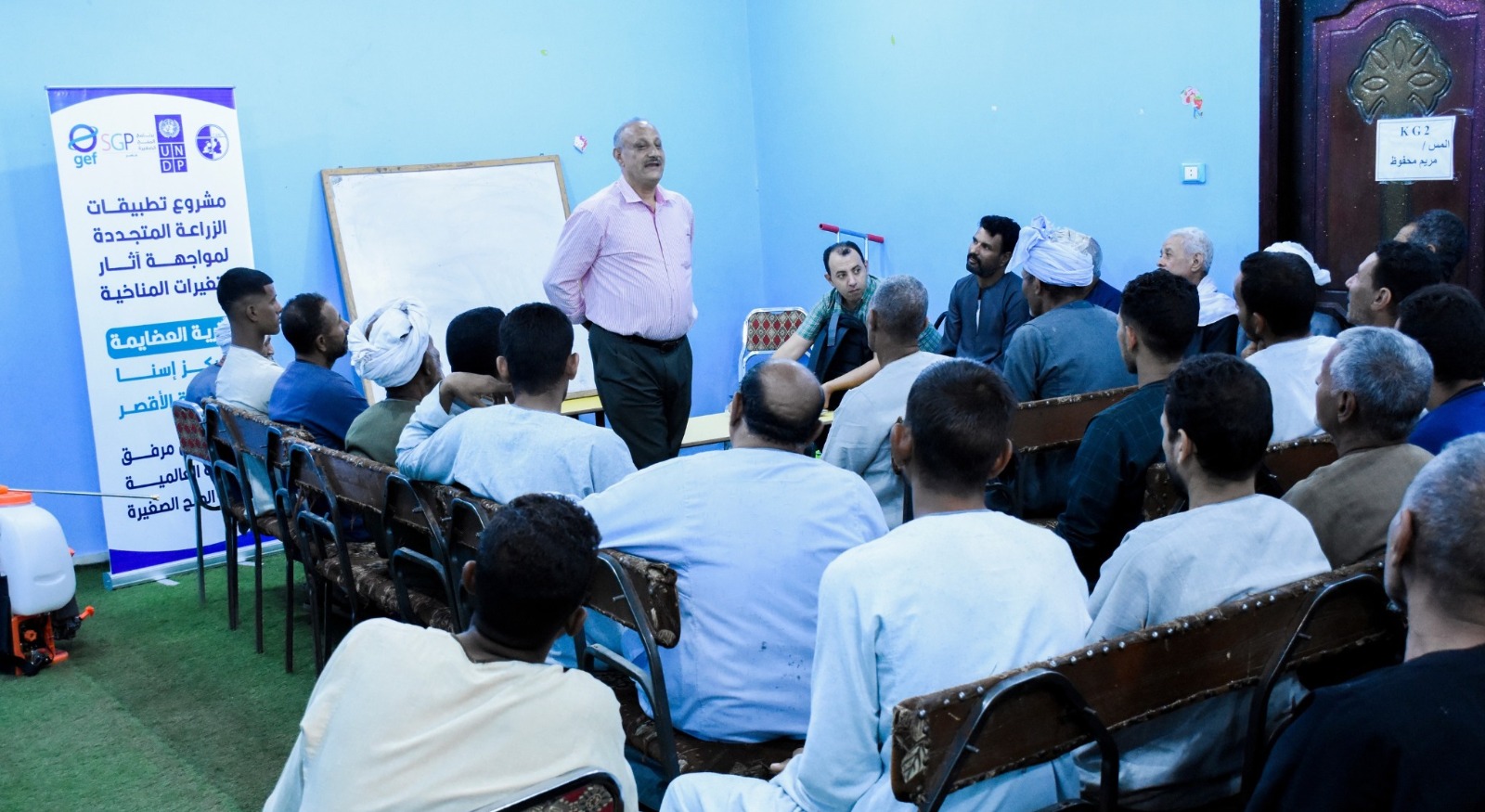
To further enhance living standards in the village, a training program was conducted for 40 farmers on regenerative agriculture techniques and smart irrigation systems. Participants were provided with scientific information on drought- and pest-resistant crops and learned about better management of natural resources such as water and soil, including methods for preparing organic compost fertilizers instead of burning agricultural residues.
The association also organized a field visit to the farmlands of small-scale farmers benefiting from the project. The visit included monitoring wheat crops, assessing field conditions, and identifying key challenges, such as soil salinity. A team of experts proposed technical solutions to improve soil quality and increase productivity. The visit also involved monitoring the operation of solar-powered irrigation systems to ensure efficient water use and reduce environmental impact, reflecting the project’s commitment to supporting small farmers.
In early December 2024, the association launched a beekeeping initiative in Al-Adayma village to improve farmers’ livelihoods through the production and marketing of local honey. The initiative also aims to create job opportunities for the village’s youth, enhance biodiversity, and preserve local ecosystems by supporting sustainable value chains. Moreover, it highlights the vital role of bees in pollination, which contributes to improving both the productivity and quality of agricultural crops.