
Medical Convoys and Training Programs on Beekeeping, Plastic Alternatives, and Combating the “Palm Weevil”
Most of the projects being implemented under the seventh phase of the Small Grants Programme (SGP) — if not all — have placed women’s empowerment at the top of their priorities, alongside other environmental and social objectives. This comes especially as one of the strategic projects of this phase, the “Bee Girls” project, is primarily focused on empowering women. Additionally, many projects across the targeted geographical regions are led by women who hold key leadership positions.
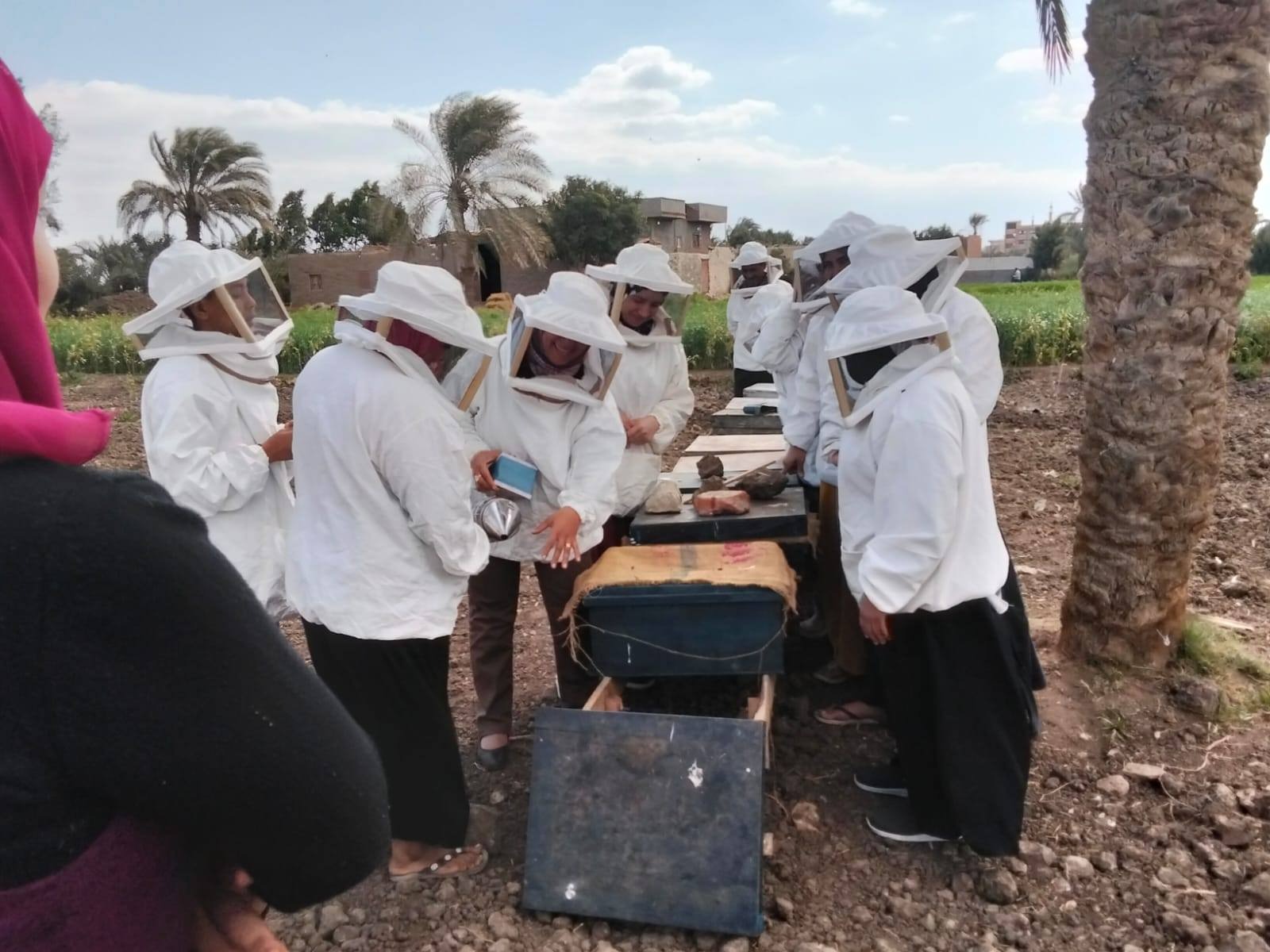
Within the framework of the “Bee Girls” project, which is being implemented in Fayoum Governorate with funding from the Global Environment Facility’s Small Grants Programme (GEF/SGP), the Senro El-Qibliya Community Development Association has continued its training activities. These sessions engage women and girls from target villages in the Abshway, Tamiya, and Youssef El-Seddiq districts, providing them with the skills and knowledge needed for beekeeping and managing honey farms. The project aims to promote environmental conservation through sustainable beekeeping practices, address poverty and unemployment, and create job opportunities for women and their families in beekeeping and honey production.
The association also organized a medical convoy, offering services in various specialties such as gynecology, pediatrics, internal medicine, dermatology, and orthopedics — targeting residents, especially women, in the project’s implementation areas.
As part of the “Palm Waste Recycling and Palm Weevil Control” project, also being implemented in Fayoum, the Afaq Al-Olya Association for Development and Environmental Services held an awareness seminar targeting women farmers in the Itsa district villages. The seminar focused on identifying the risks posed by the red palm weevil, methods of early detection, and effective control techniques to protect palm trees from damage — thereby safeguarding farmers’ livelihoods and promoting environmental sustainability.
In Cairo, the Rowad Foundation for Projects and Development organized an awareness seminar for women beneficiaries of the “Sustainable Management of Plastic Waste and Climate Change Mitigation” project. The event, held in collaboration with the Environmental Awareness and NGOs Departments of the Ministry of Environment, included practical training for women on designing and sewing fabric bags — one of the eco-friendly alternatives to single-use plastic bags. The project aims to enhance women’s production skills, empower them economically, and reduce environmental pollution by promoting sustainable plastic alternatives.
In Giza, the Beit Ala El-Sakhr Development Association held a training workshop under the “Green Warraq” project, targeting women and housewives in the Warraq area. The workshop focused on raising awareness about proper waste management, safe disposal, and the social and economic benefits of recycling. It emphasized the central role of women in household waste management, given their unique capacity to sort waste at the source and participate in waste-for-goods exchange models — contributing to a cleaner and more sustainable environment.