
“Small Grants” Program Gives Carriage Drivers the Chance to Shape a Brighter Future for the Tourist City
In Luxor — where ancient heritage harmonizes with modern life, and horse-drawn carriages weave through its historic streets — a simple yet powerful idea was born: transforming what was once seen as “waste” into a valuable resource that improves the environment, enhances livelihoods, and inspires hope for a cleaner, better tomorrow.
This vision was brought to life through the Small Grants Programme (GEF/SGP), in partnership with Nour Al-Islam Charity Association in Luxor, under the pioneering project titled “Providing Livelihood Opportunities through Training on Recycling Horse Manure into Organic Fertilizer.” The initiative goes beyond its environmental goals to also empower local communities.
From Horse Manure… the Story Begins
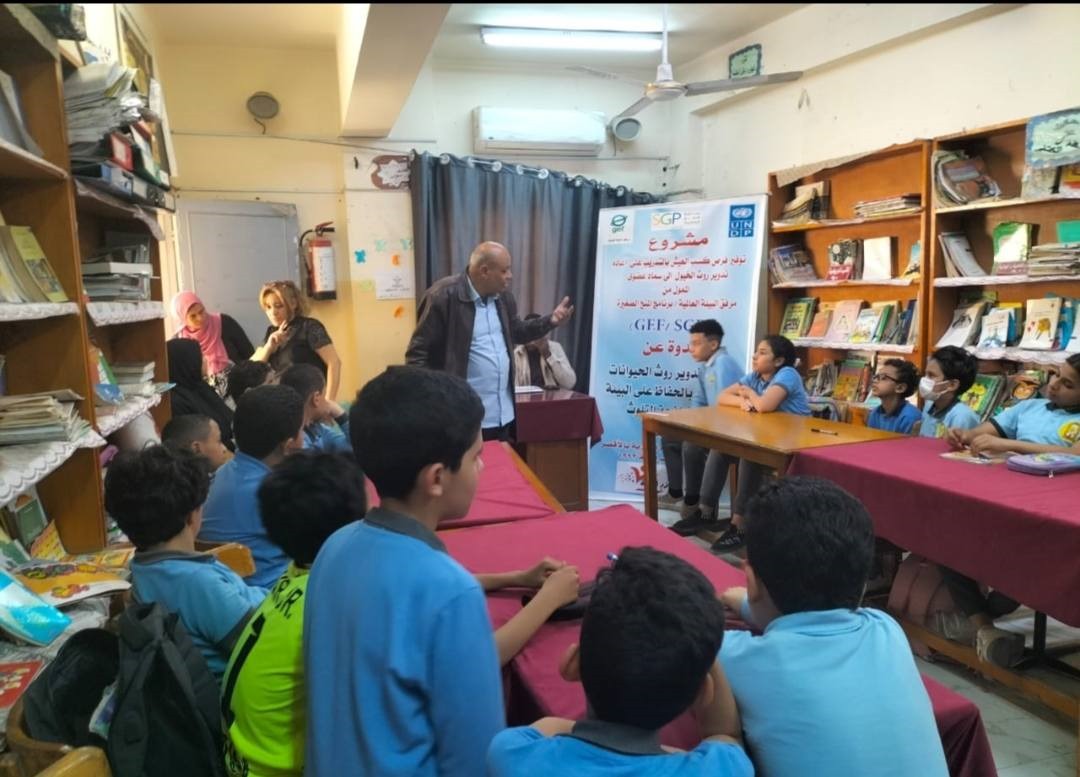
During an educational workshop held at the Catholic Primary School in Luxor, Dr. Hamed Mohamed Ismail stood before the students to talk about animal waste. What initially seemed like an unpleasant topic soon became, in their eyes, a story of environmental rescue, job creation, and a path toward organic agriculture — even a source of renewable energy.
“Manure is not the end, but the beginning of a new life cycle,”
said Dr. Ismail, summarizing the project’s philosophy.
He emphasized that recycling organic waste can prevent land degradation, reduce greenhouse gas emissions, protect water purity, and minimize pollution.
A Cleaner Environment and a New Source of Income
The main beneficiaries of the project are horse carriage drivers, who had long considered horse waste a daily nuisance on city streets. However, after attending a special session led by Dr. Afaf Abdel Baset, titled “The Environmental and Health Impact of Safe Manure Management,” their perspective changed entirely.
She explained the environmental and health risks of neglecting animal waste — from attracting insects and spreading disease to polluting air and water, and tarnishing the image of a city that depends on tourism. Then, she presented practical solutions: special bags for manure collection, designated disposal sites, and systems for converting manure into organic fertilizer or biogas.
Through hands-on training and awareness activities, carriage owners came to realize that collecting manure was not an extra burden but an income-generating opportunity. The produced organic compost can be sold to farmers or used in local green projects, while biogas derived from the manure offers a sustainable alternative to traditional fuels for households and small communities.
Children: Partners in Change
The younger generation was not left behind — they became an active part of the movement. Children learned that environmental care is not someone else’s duty, but their own responsibility. They drew pictures, shared ideas, and imagined a city free of foul odors, insects, and pollution. Thus, a culture of environmental awareness began to grow — one rooted in understanding, not just instruction.
A Model Worth Replicating
The Small Grants Programme (GEF/SGP) offers a practical demonstration of how small-scale, locally led initiatives can generate large-scale change when guided by science and community participation. This project is not merely about recycling — it is a holistic development experience touching the environment, economy, education, and public health.
When local communities are given tools, knowledge, and confidence, they become active partners in achieving sustainable development. The horse manure recycling project in Luxor stands as a true success story, proving that environmental solutions do not always require complexity — sometimes, they begin with a simple bag behind a horse carriage and end with a cleaner environment and renewed hope for generations to come.