
Alliance for Sustainability: Alexandria University and “Our Earth’s Climate” Lead a Model for Low-Carbon Education
In a qualitative step toward integrating sustainability into the educational process and promoting climate action on campus, the “Our Earth’s Climate for Sustainable Development” Foundation signed a joint cooperation agreement with Alexandria University. This initiative is part of the “Green Universities for a Better Future” project, funded by the Small Grants Programme of the Global Environment Facility (GEF/SGP).
The agreement, signed at the Faculty of Pharmacy at Alexandria University, aims to transform the faculty into a pioneering model of a “green college” by reducing its carbon footprint, integrating concepts of green economy and environmental entrepreneurship into academic programs, and activating student participation in sustainability initiatives. This partnership between civil society and academic institutions stands out as one of the most interactive models driving the shift toward sustainable, low-emission education.
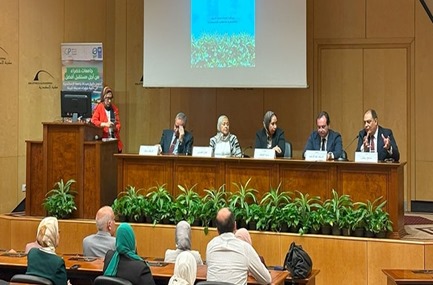
To launch the project, “Our Earth’s Climate” organized the first awareness workshop at the Bibliotheca Alexandrina, attended by representatives from the Ministry of Environment, Alexandria University, students, and faculty members. During the workshop, the results of the carbon footprint study for the Faculty of Pharmacy—conducted by a specialized company—were announced, providing a scientific database to guide intervention priorities and future action plans.
The workshop also explored opportunities to integrate green curricula into university education and ways to enhance the role of university youth in addressing the climate change crisis through innovative solutions and student-led community initiatives. Successful international experiences in “green campus” models were also presented, supporting local thinking with a global perspective.