
Upgrading the “Science Club” at Qubbat Al-Hassana Reserve Crowns the Achievements of the Small Grants Program Sekem for Development Launches Egypt’s First Environmental Center to Integrate Sustainability into Educational Activities
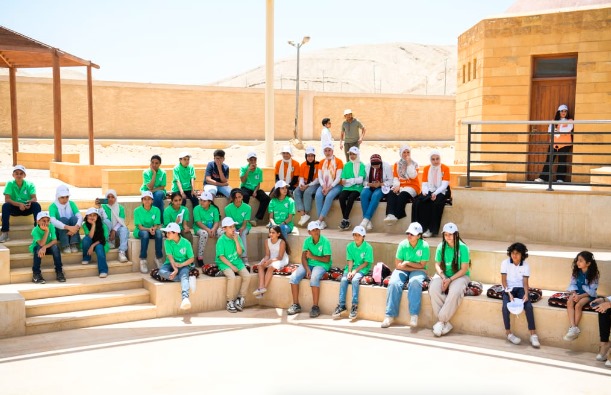
The Small Grants Program (GEF/SGP) in Egypt has added a new milestone to its seventh operational phase with the launch of a project to upgrade the “Science Club” at Qubbat Al-Hassana Nature Reserve. The project, implemented by the Sekem for Development Association, aims to rehabilitate the club and transform it into a fully integrated environmental education center, embedding sustainability concepts into modern scientific curricula.
Approved recently by the National Steering Committee of the Small Grants Program, the Science Club development project raises the total number of environmental initiatives under Phase Seven to 27 projects across seven governorates—reflecting the program’s growing momentum in supporting local communities and promoting environmental and educational sustainability nationwide.
This project marks a qualitative shift in the utilization of Qubbat Al-Hassana Reserve, one of Egypt’s unique natural sites known for its geological and biological diversity, rare fossils, and distinctive formations. The initiative is built on a comprehensive vision that includes infrastructure development, educator training, and the design of applied educational programs addressing contemporary environmental issues such as climate change, water management, renewable energy, organic agriculture, and biodiversity conservation.
The project aligns with several national policies and strategies, most notably Egypt’s Vision 2030 and the National Climate Change Strategy. It also supports the achievement of the Sustainable Development Goals (SDGs), particularly Goal 4 (Quality Education), Goal 13 (Climate Action), and Goal 15 (Life on Land).
By leveraging the reserve’s unique natural features, the project aims to turn it into an “open-air classroom” that bridges educational gaps through interactive content that enhances environmental awareness among younger generations. Youth empowerment is a central priority, with training and volunteer programs designed to build technical capacity and equip participants with green skills for active engagement in the environmental job market.
The project includes a comprehensive infrastructure upgrade within the reserve—from redesigning outdoor spaces into stimulating learning environments, to improving indoor halls with modern educational equipment, creating natural green zones with efficient irrigation systems, and enhancing the club’s institutional identity through a new logo and mission inspired by the reserve’s ecological character. It also involves launching a website and communication platforms to showcase the programs and activities driving the project’s goals.
To strengthen community engagement, the project plans to establish educational partnerships with public and international schools, organize teacher workshops and student learning camps, and develop a sustainable institutional sponsorship model in collaboration with private sector companies committed to environmental and social responsibility. The project is expected to leave a lasting impact on student behavior and participant attitudes by instilling environmental values and positive practices that ripple through families and communities.
The “Science Club at Qubbat Al-Hassana Reserve” project stands as a pioneering model for transforming natural sites into hubs of scientific and educational enlightenment. It marks a new chapter in integrating environmental education into Egypt’s sustainable development framework—driven by a fruitful partnership between Sekem for Development and the Small Grants Program in Egypt.