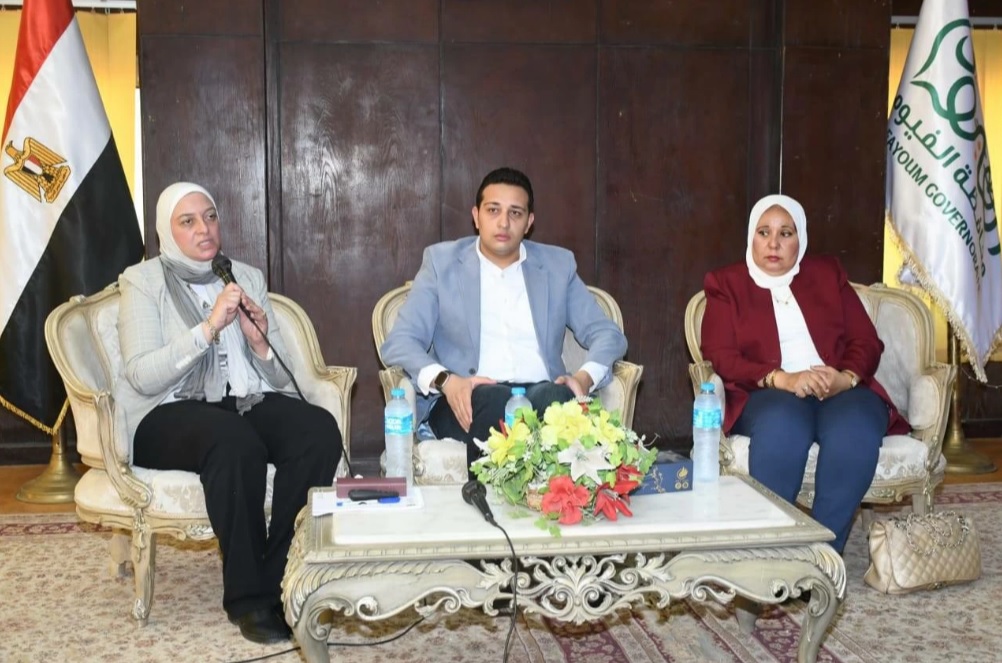
In a move aimed at strengthening sustainable development efforts in Fayoum Governorate and enhancing the role of civil society in addressing environmental and water-related challenges, a workshop discussed project proposals submitted by local NGOs seeking funding from the Global Environment Facility Small Grants Programme (GEF/SGP). The workshop was held as part of the programme’s eighth operational phase in Egypt, opening the way for development initiatives that respond to local needs and offer practical solutions to environmental problems.
Dr. Mohamed El-Touny, Deputy Governor of Fayoum, attended the workshop, alongside Dr. Engy Hassan, Director of the Fayoum Directorate of Social Solidarity; Ghada Ahmedin, National Coordinator of the Small Grants Programme; Dr. Samar Saeed, Director of the Governorate’s Information and Digital Transformation Centre; Dr. Marwa Ahmed Mohamed, Director of the Project Implementation Follow-up Unit at the Central Administration for the Governor’s Office Affairs; and representatives of several local NGOs.
The Deputy Governor stressed the importance of Fayoum’s renewed participation in the programme, describing it as a key mechanism for empowering civil society organizations and local communities to implement small-scale projects with tangible development and environmental benefits. He noted that the funding provided through the programme offers an opportunity to strengthen local initiatives in biodiversity conservation, climate change mitigation and adaptation, sustainable natural resource management, and pollution reduction.
He explained that the programme’s role extends beyond providing financial support to encouraging NGOs to develop innovative ideas and translate them into practical projects that improve environmental conditions and residents’ quality of life. Such initiatives also strengthen community participation in development efforts while addressing Fayoum’s specific needs and priorities.
The Deputy Governor pointed out that the priorities for the current phase are shaped by the governorate’s most pressing environmental and water-related challenges. These include promoting water conservation, addressing waste in waterways, expanding the application of smart irrigation systems, strengthening water resource governance, and developing safe and sustainable approaches to waste management.
He emphasized the importance of directing project proposals towards practical, implementable solutions capable of delivering measurable results on the ground. Such projects should contribute to protecting natural resources, improving resource-use efficiency, and reducing environmentally harmful practices. He also reaffirmed the governorate’s readiness to support NGOs and encourage them to take advantage of the funding opportunities offered by the programme.
He further highlighted the governorate’s commitment to maintaining its strong performance in securing programme funding, building on the achievements of previous funding cycles. This would be achieved by supporting projects distinguished by sound planning, innovation, and the ability to address actual environmental challenges, while reflecting the awareness of Fayoum’s residents of the importance of conserving natural resources and achieving the Sustainable Development Goals (SDGs).
The Deputy Governor called on NGOs and civil society organizations to develop innovative, feasible project proposals directly linked to the governorate’s environmental and water-related needs. He stressed the importance of engaging local communities throughout the project cycle to increase the likelihood of success and ensure that project benefits continue beyond the funding period.
For her part, Dr. Engy Hassan, Director of the Fayoum Directorate of Social Solidarity, highlighted the importance of the grants in supporting NGOs and enabling them to implement projects that deliver positive benefits for both society and the environment. She emphasized the need to encourage NGOs to participate actively and take advantage of available funding opportunities to develop their initiatives and achieve their development objectives.
Ghada Ahmedin, National Coordinator of the Small Grants Programme, outlined the programme’s objectives, application procedures, and criteria for selecting eligible projects. She explained that funding opportunities cover both existing projects that NGOs seek to develop and expand in impact and new projects proposed for implementation within the governorate.
She also explained the application procedures, required documentation, and funding mechanisms applicable in the five governorates targeted during the current phase. In addition, she highlighted common mistakes identified in proposals submitted during previous funding cycles, with the aim of preventing their recurrence, improving project quality, and increasing the likelihood of approval.
The workshop underscored the importance of coordination among the governorate, the Small Grants Programme, and local NGOs to direct funding towards development projects that address local priorities, promote sustainable natural resource management, and strengthen communities’ capacity to respond to environmental challenges. These community-led initiatives can thus serve as an important driver of sustainable development in Fayoum.